Tennis Elbow (Lateral Epicondylitis): Can You Get It Without Playing Tennis?
Tennis elbow is common in people who never play tennis. Symptoms, causes, exercises and when surgery is needed.
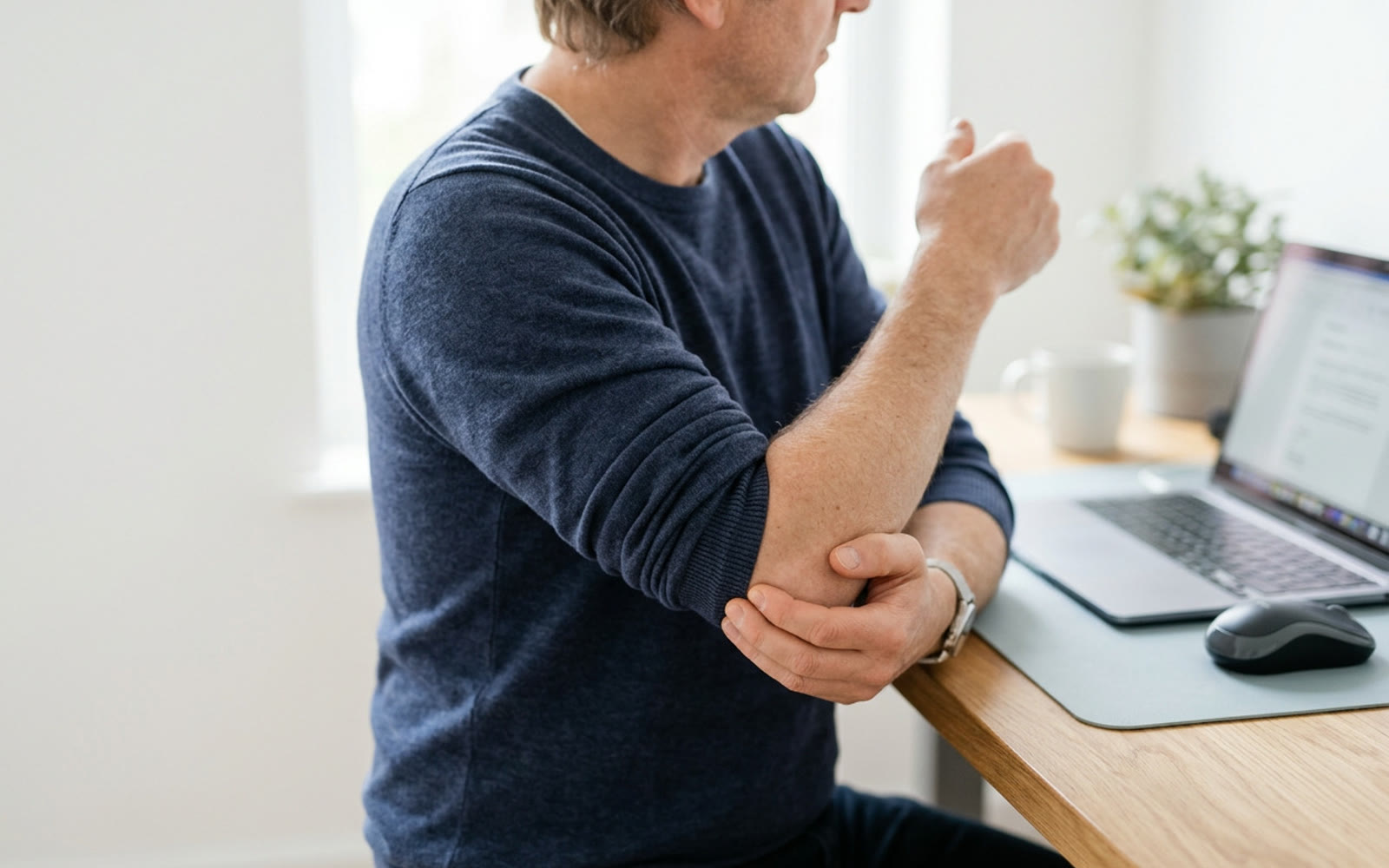
Short answer: Tennis elbow (medically lateral epicondylitis) is wear and tear of the tendon attachment on the outer side of the elbow caused by repeated strain. Most patients do not play tennis: using a computer mouse, wringing cloths, lifting a child or using a screwdriver strain the same spot. Around 80 to 90 percent of cases settle without surgery; surgery is needed only in a few patients whose symptoms last and do not respond to treatment.
Dr Ahmet Şadi Kılınç, Orthopaedics and Traumatology Specialist, Bahçeşehir, Istanbul
If you feel a sharp pain on the outer side of your elbow when turning a door handle, holding a coffee cup or shaking hands, it may have nothing to do with tennis. Most people who come to my clinic with this complaint are office workers, tradespeople, home-makers or new parents.
I also explain it in a short video, in Turkish: watch on YouTube.
What is tennis elbow?
The tendons of the muscles that lift the wrist and fingers backwards attach to the bony bump on the outside of the elbow (the lateral epicondyle). The tendon of extensor carpi radialis brevis in particular develops small tears and structural change after repeated strain. It was once thought to be inflammation, hence “epicondylitis”, but today the problem is understood mainly as tendon fatigue and degeneration (tendinopathy).
It is most common between ages 35 and 55 and usually affects the dominant hand.
Symptoms
- Pain on the outer side of the elbow, sometimes spreading down the forearm
- Pain when gripping, lifting, or turning a door handle or bottle cap
- Weak grip when shaking hands or holding a cup
- Pain when lifting the wrist backwards
- Tenderness when pressing on the bony bump
- Morning stiffness in the elbow
Why does it happen without tennis?
The cause is repetition, not the sport. Common causes include:
- Long hours with a mouse and keyboard
- Wringing and wiping cloths, cleaning
- Carrying a child or heavy bags with a bent wrist
- Working with screwdrivers, hammers or paint brushes
- Racket sports, golf, weight training
- A sudden increase in workload or training
Diagnosis
Diagnosis is usually made by examination. Pain on the outer elbow when lifting the wrist against resistance is typical. If needed, ultrasound or MRI shows the tendon, and conditions that cause similar pain, such as a pinched nerve in the neck, are considered.
Treatment
Treatment is mostly non-surgical and step by step:
- Activity changes: Reduce movements that provoke pain. Complete rest is not necessary.
- Physiotherapy and exercise: Stretching and slow, loaded (eccentric) strengthening of the forearm muscles is the basis of treatment.
- Support: A forearm or elbow strap can reduce the load on the tendon.
- Pain control: Cold packs, short courses of pain relievers and creams can help.
- Shock wave therapy, PRP and similar: Considered in selected patients. Cortisone injections may give quick relief, but can delay healing in the long term, so they are used carefully and sparingly.
Tendons heal slowly. Clear improvement often takes weeks to months, so patience and regular exercise are needed.
When is surgery needed?
If pain that limits daily life continues for about 6 to 12 months despite proper non-surgical treatment, surgery is considered. Removing the damaged part of the tendon can be done arthroscopically (keyhole). For details, see our page on arthroscopic treatment of tennis elbow.
Everyday precautions
- Position the mouse and keyboard so your wrist stays neutral.
- Take a short break every 30 to 45 minutes and stretch your forearm.
- Carry heavy objects with the palm up and elbow bent.
- Strengthen your forearm muscles regularly.
- Do not increase workload or training intensity suddenly.
When to see a doctor
See an orthopaedic specialist if the pain lasts more than a few weeks, wakes you at night, stops you doing daily tasks, or comes with numbness or tingling in the arm. These can point to other causes such as a pinched nerve from the neck. You can book an appointment.
This article is for general information and does not replace an examination.
Frequently asked questions
What is tennis elbow?
Wear and tear of the tendon attachment on the outer side of the elbow caused by repeated strain. The medical name is lateral epicondylitis.
Can you get tennis elbow without playing tennis?
Yes. Most patients do not play tennis. Computer use, wringing cloths, carrying heavy bags and using tools can all cause it.
Does tennis elbow go away on its own?
In most patients it improves within months. Activity changes and the right exercises shorten the course and reduce recurrence.
Is surgery needed for tennis elbow?
Not in 80 to 90 percent of patients. Surgery is considered if pain that limits daily life lasts 6 to 12 months despite proper non-surgical treatment.
Are cortisone injections used for tennis elbow?
They can give short-term relief but may delay healing in the long term, so they are used carefully and sparingly, as decided with your doctor.
The information on this page is general and does not replace an examination. An examination is needed to decide which treatment suits you.